
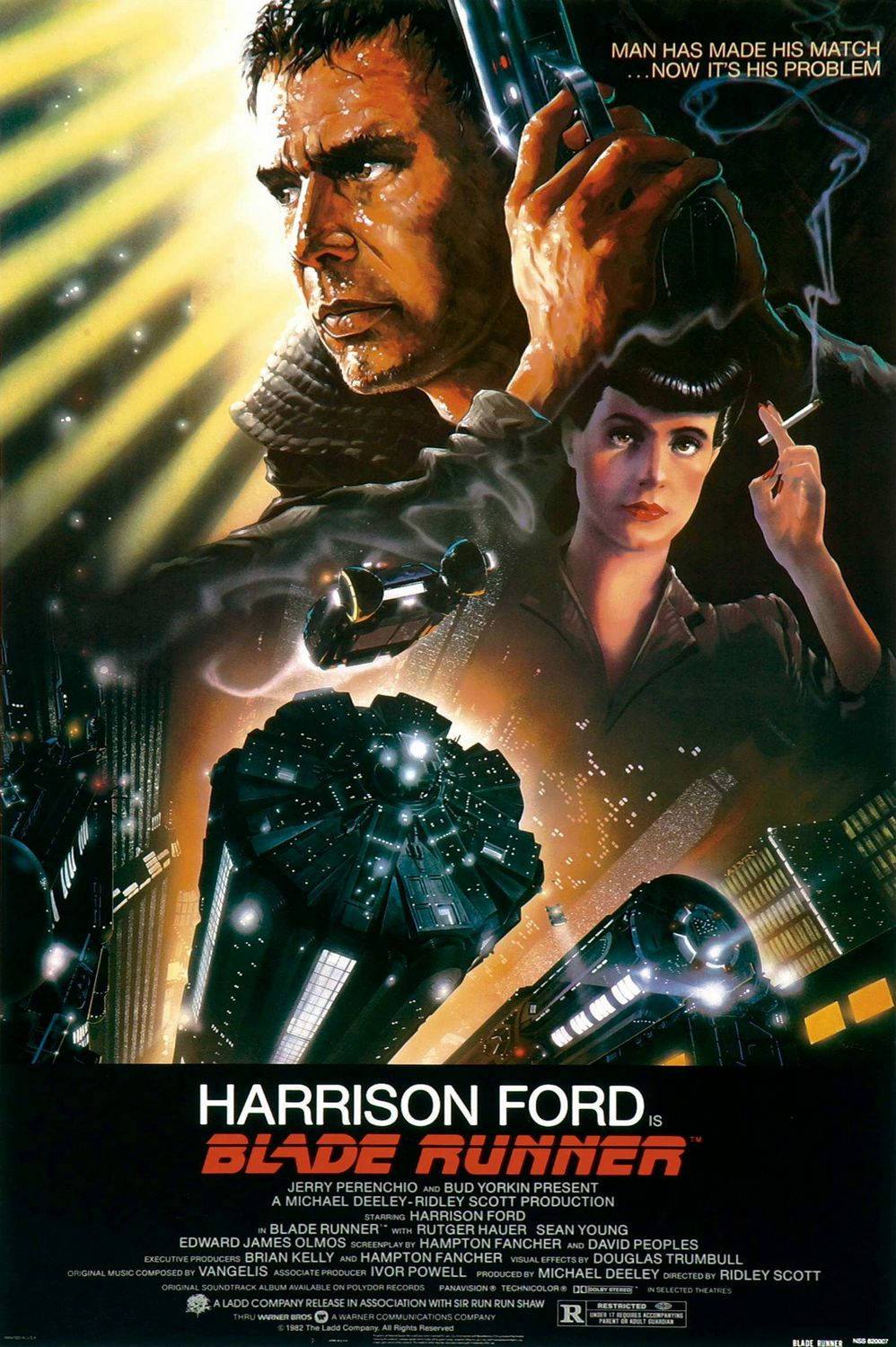
Up until a month or so ago, I had never seen Blade Runner. Crazy I know, but I wasn’t raised to have an affection towards movies, especially ones that challenge my reality and society at large. The timing of me experiencing Blade Runner, and the soundtrack by Vangelis for the first time was perfect. I was building a very long dystopian themed DJ set for a party at True Love Art Gallery in Seattle. After downloading the Blade Runner soundtrack, I spent a long time listening to it before I saw the film. The music Vangelis created here works really well with the often times dreary look of Washington, and I developed my own narrative driving around the city. I recommend using his music to soundtrack your own driving adventures, it’s relaxing and surreal.
So after hearing the music on it’s own for a while, I finally got to watching the movie, and since then have watched it close to a dozen times. These have all been of the Director’s Cut, with the voice-over’s taken out and the additional scenes put in. Early this morning I watched Dangerous Days: Making Blade Runner; a three-and-a-half hour documentary taking you inside the development and execution of the film, complete with all the difficulties involved with it’s production. It can be easy to view a film like Blade Runner, recognize it’s significance, but still not understand the depth of pain and suffering going on behind the scenes to get the final result.
Adapted from Do Androids Dream of Electric Sheep?, a novel by Philip K. Dick, it took several other choices and a fair amount of convincing before Ridley Scott agreed to take on the project, originally titled “Dangerous Days”. Scott was in the process of directing Dune, but a combination of slow filming pace and the death of his older brother lead him to the task of bringing Blade Runner to life. The final title of the film came from William S. Burroughs Blade Runner (a movie), a science fiction novella and proposed screen adaptation of Alan E. Nourse’s The Blade Runner. With a small budget and a script originally written by Hampton Fancher, re-written by David Peoples, the film was on it’s way. Blade Runner eventually got the approval of Philip K. Dick, after he read the re-written script and saw a special effects reel, demonstrating what this world would look like. He said that Ridley Scott perfectly realized the environment he imagined in his novel.
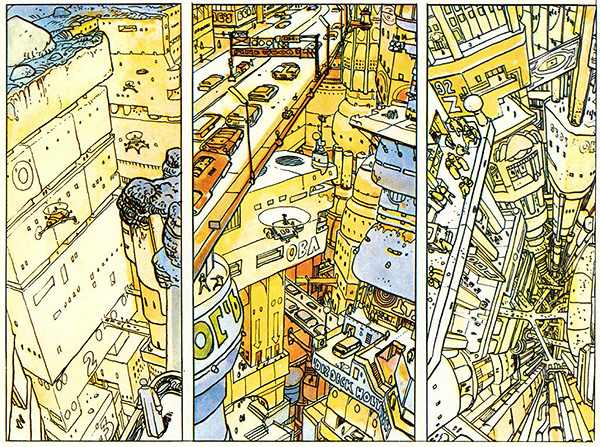
Scott named French comic series Heavy Hurlant, aka Heavy Metal and Edward Hopper’s Nighthawks painting as influences for the style and mood of this science-fiction noir film. Interpretations of a worn down Hong Kong and the industrial landscape of northeast England where Scott was from, were also used.
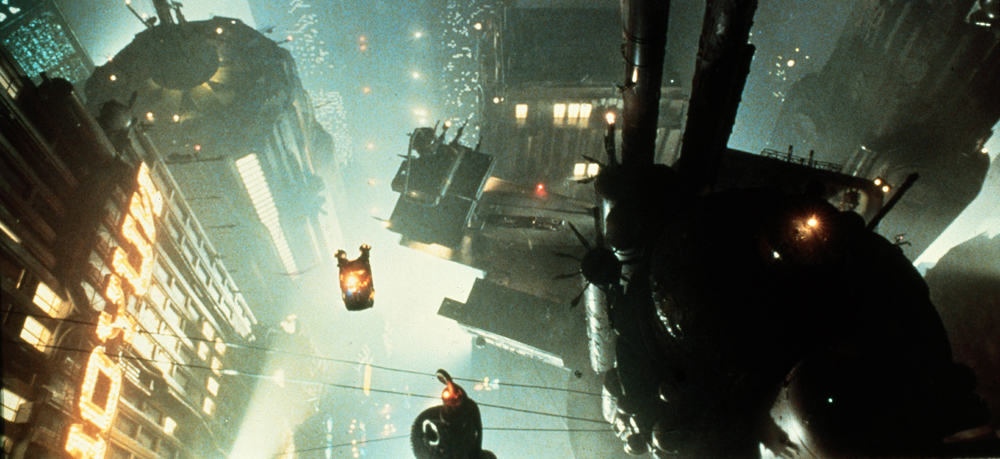
I was amazed by lengths Ridley Scott and his team went to make the world of Blade Runner as real as possible. The building of the city, the props, the costumes, the miniatures were done with the utmost precision and care. The crew worked at night, outside, in the rain almost all of the time. You’ll have to watch the documentary to see for yourself, but it’s astounding and incredibly inspiring. Ridley Scott took charge of some many levels of this film’s creation, taking talented people and bringing them up to a much higher quality level. Many feel that the roles some of these actors played in the film (Harrison Ford, Rutger Hauer, Sean Young, Daryl Hannah, Joe Turkel etc.) are some of their best performances ever. During filming, Scott would blast the early Vangelis music for the film from speakers on top of the buildings, so everyone felt completely immersed in the environment.
Vangelis is a Greek composer best known for the soundtrack of Chariots of Fire. He is a genius in my book, for his perfect audio representation of Blade Runner. It’s dark, it’s melodic and emotionally gripping from start to finish. The combination of classical composition and synthesizers encapsulate the film’s themes around what it means to be a human.
For all the incredible, forward thinking elements of this film, the audience in 1982 wasn’t ready. With E.T. dominating the movie theater experience, people wanted something more utopian, more positive. A small group of people held onto the film, recognizing it as a revolutionary presentation of the future, and over the years it gained recognition and respect. It’s reassuring to see that a film I instantly understood as mind-blowing was seen as bizarre and unintelligible to many at the time of it’s release. Some things take time for people to fully understand, and the first reaction is not the best way to calculate something’s importance and worth. Blade Runner is to many, the ultimate science-fiction film noir, and it’s influence and legacy are constantly evolving.

– Jimi Jaxon
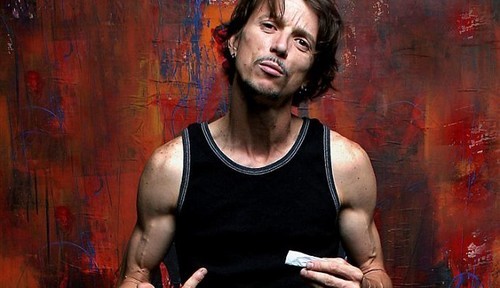
A couple days ago I was inspired by an episode of Breaking The Set with Abby Martin. She is an artist, founder of Media Roots, B.O.D. of Project Censored and host of my favorite news program, RT’s ‘Breaking The Set’. She has a fearless attitude toward investigative journalism, presenting her stories with a burning passion. I think some people watch the show and think that she’s coming on too strong, or too radical. Unfortunately, many newscasters read their teleprompters in such a robotic, insensitive fashion, that they make others appear over the top. It reminds me of an M.I.A. interview from a few years with Q TV. I’ve mentioned it in the past, and continue to return to her words, as I think she nails this topic. She says, “The only reason why you think I’m causing a stir is because no one else is doing it. Like, that’s why you think I stick out like a sore thumb as someone whose obviously so wrong..”.
In the episode posted above, at 7:51, Abby begins her “Artists’ Duty” segment. Nina Simone once said, “An artists’ duty is to reflect the times.”. Abby goes on to say, “In today’s society, art is going through a transformational crisis. Contemporary artists are becoming victims of the consumer culture of mass commercialization and corporatization.”. She empowers and challenges artists to carry on with Nina Simone’s message, instead of becoming another victim of a twisted system. One such person exemplifying this attitude to a T is LA-based street artist and muralist, Mear One. Abby Martin interviewed him for ‘Breaking The Set’, starting at 19:08. This was my first time seeing his work, and I was completely blown away by his politically charged art.
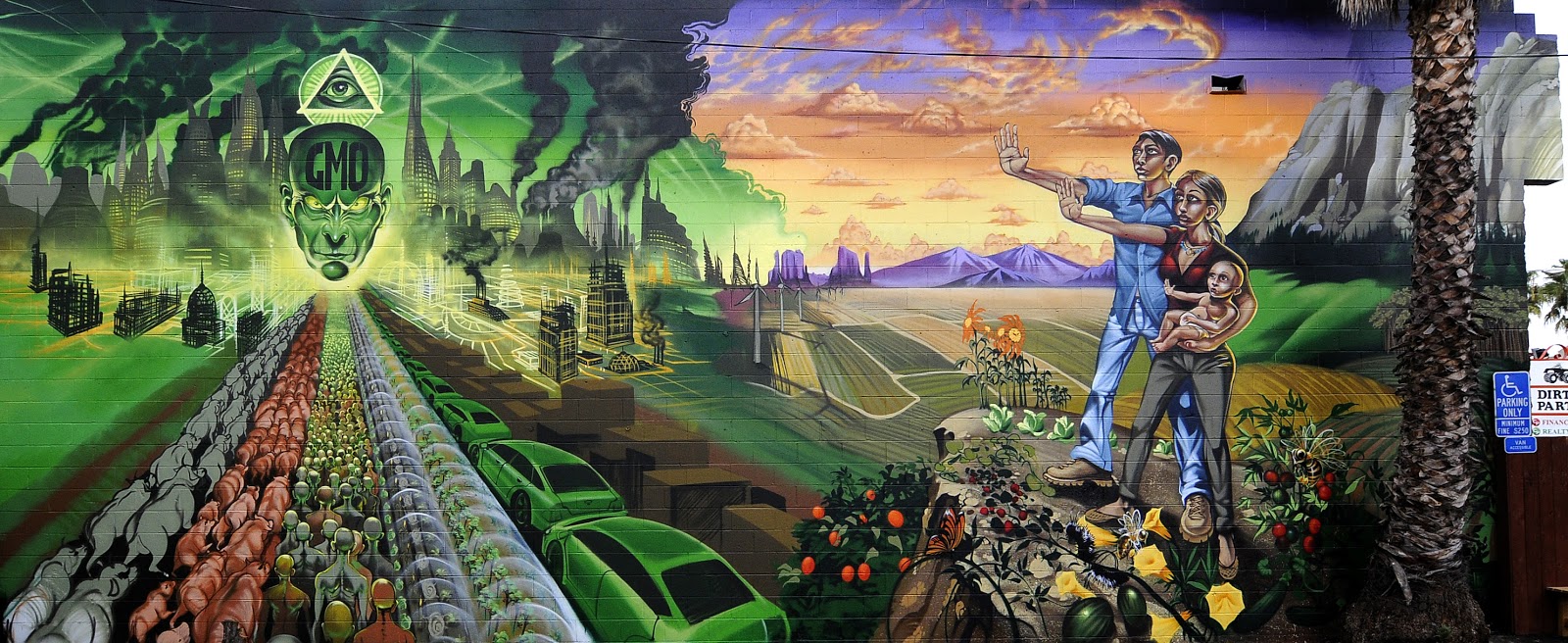
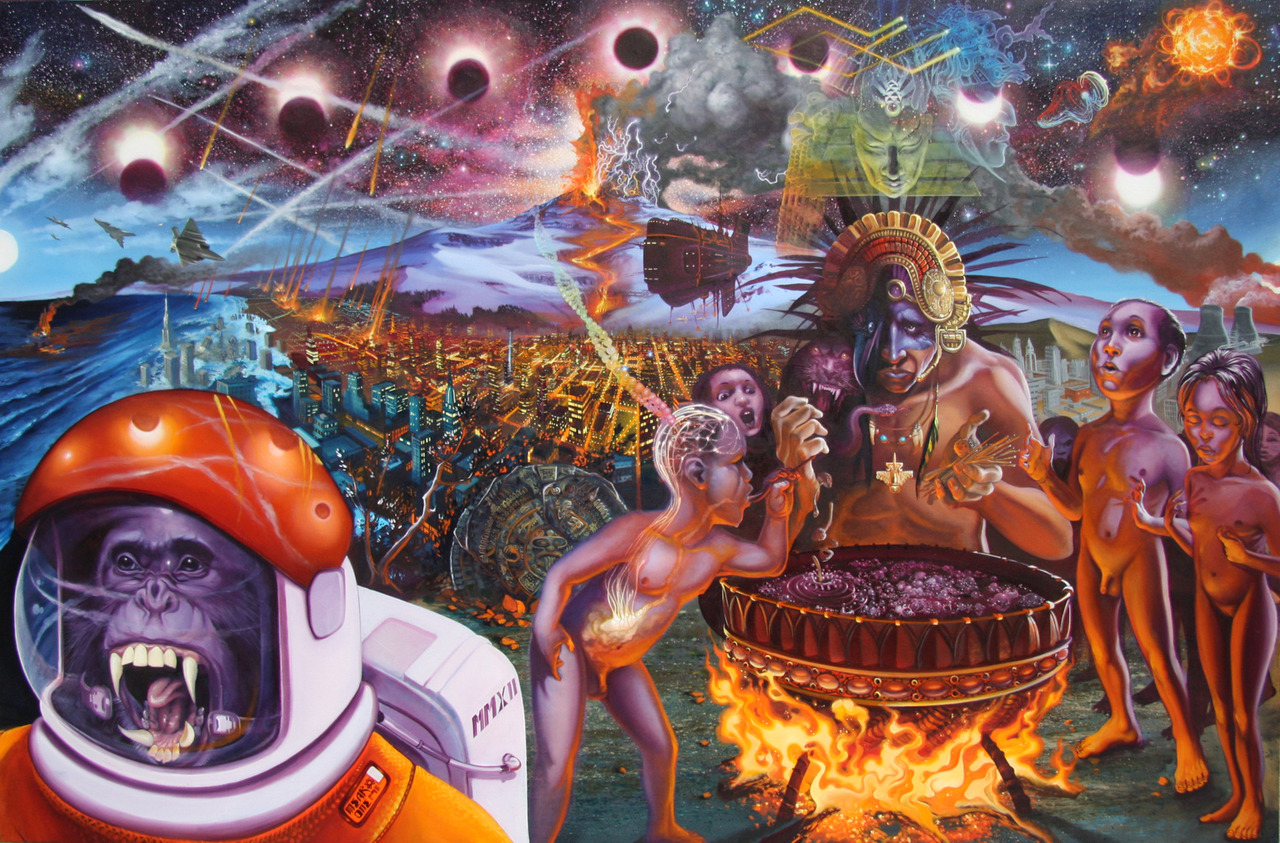
They discuss a few of his pieces including “Freedom For Humanity”, “Humanity vs. The Machine” and “Allegory of Complacency”. These political satires depict the socio-economic system that has a stranglehold on our lives. This system is often hidden from the majority of the public, and sadly, conversation about these issues can result in people being dismissed as crazy and/or conspiracy theorists.
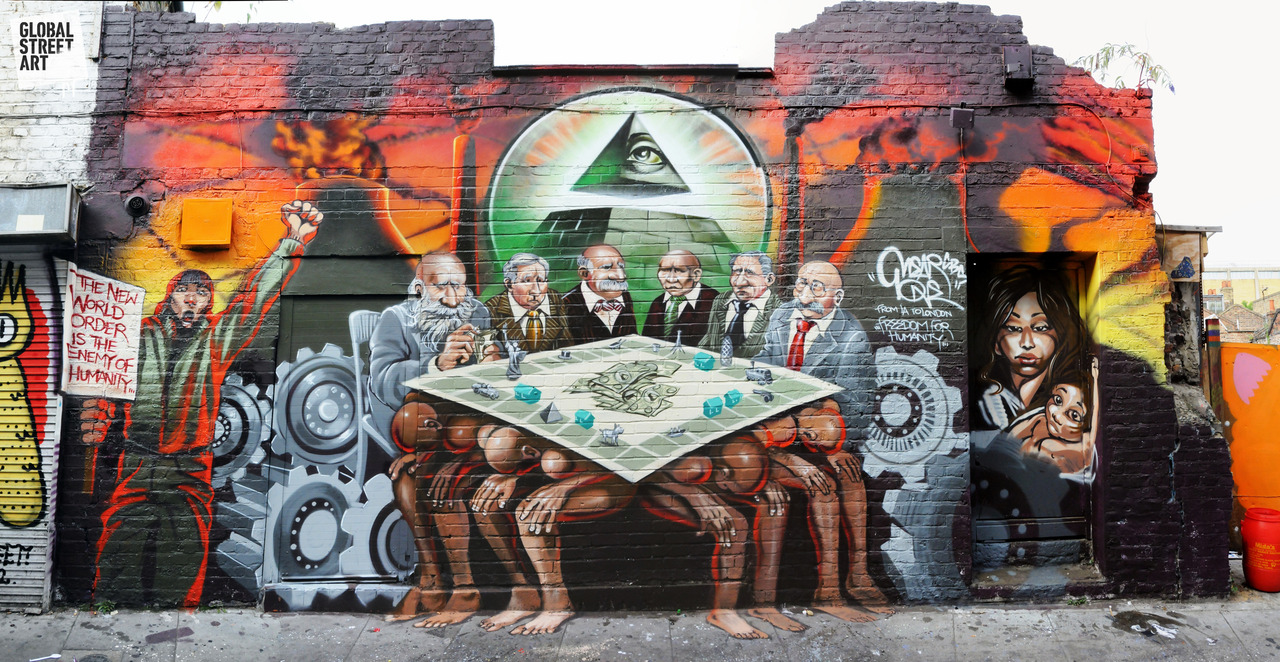
The remedy for this lack of conversation often comes in the form of art. It can speak in ways that words cannot, conveying messages that penetrate deeper than any argument. It has the ability to reach and challenge people across all borders of language, ethnicity, sexual orientation and political affiliation.
Since 1986, Mear One aka Kalen Ockerman has been building a body of work that has gained him the title of “The Michelangelo of Graffiti”. His bio states, “He is considered by many to be Los Angeles’ most prolific graffiti artist because of the way he revolutionized graffiti with his fine-art realism, breaking out of traditional 2D letter forms, and using perspective to develop complex characters with dynamic backgrounds in epic scale.”. He takes his inspirations; ancient technology, science, philosophy, mythology, mysticism, political and cultural revolution and the apocalypse, and blends them into deeply powerful statements through the medium of visual art.

Mear One – Twitter Tumblr Facebook
– Jimi Jaxon
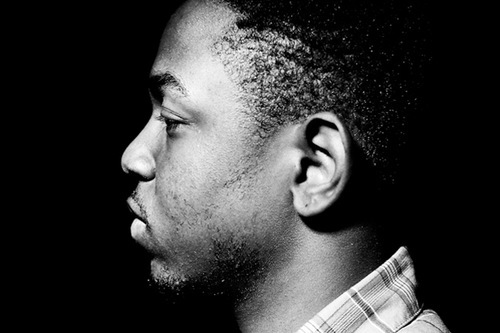
Many of you out there have followed Kendrick Lamar and his T.D.E./Black Hippy crew for a long time. I started hearing his name very recently, picked up his sophomore album good kid, m.A.A.d city, and have worked my way backwards through his discography. Last night I listened through his debut album, Section.80 for the first time and it’s fantastic. Released in 2011 via Top Dawg Entertainment, Kendrick’s debut was celebrated across the board, with positive reviews from Pitchfork, XXL and Complex Magazine who crowned it the 7th best album of 2011. On top of that, artists such as Pharrell Williams, Lil Wayne, and even Lady Gaga praised the release. The most enduring comment came from Snoop Dogg, who called Kendrick Lamar “the new king of the West Coast”.
Section.80 is a very complete idea, but after hearing where he went in 2012 with good kid, m.A.A.d city, that idea was one piece of a much more massive vision. His demonstration of vulnerability, thoughtfulness and gritty real-life topics in this new album are wrapped around a vast array of sounds, lyrical styles and vocal techniques. This package of songs greatly expands on his previous productions, and the more I listen to good kid, m.A.A.d city, the more I understand it as a masterful concept album.
Kendrick Lamar grew up in Compton, California, an area that became famous for the gangster rap of N.W.A., Snoop Dogg and 2Pac to name a few. This new form of hip-hop reflected the harsh urban environment these rappers found themselves in; often focusing on crime, violence, racism, sex, substance abuse, homophobia, misogyny and materialism among other topics. The lifestyle and music gave Compton international attention, but over time it came to represent a mostly negative perception of the west coast. Enter Kendrick Lamar, whose words and beats show his appreciation of where he comes from, as well as a progressive intention to represent a broader perspective. In his words, “You know Compton..You don’t hear no artists from Compton showing vulnerability. You always hear about the person pulling the trigger. You never hear about the one in from of it.”. The perspective of the victim, those trapped within a broken system with few opportunities runs through Lamar’s music in a very real way. In good kid, m.A.A.d city, he lays out his upbringing for all to see. It feels almost wrong to break up this album, showing only certain songs, but I want to give a snapshot of Kendrick Lamar’s versatility and encourage a full listen to see his concept fully come to life.
An area that really stands out to me are the vocalist elements; the singing, both pitch-shifted and not, the harmonies and the layering of voices in good kid, m.A.A.d city. In “Backseat Freestyle”, “m.A.A.d city (feat. MC Eiht)”, “Sing About Me, I’m Dying of Thirst” and “Real (feat. Anna Wise of SonnyMoon)” you hear vocal pieces that are very distinct and forward thinking.
Dr. Dre was a main figure in helping to bring West Coast rap to the world. He helped Snoop Dogg, Eminem, 50 Cent and The Game rise to prominence. Most recently, he’s focused his attention on Kendrick Lamar. After hearing Lamar’s 2010 mixtape Overly Dedicated he got in touch with him, and that encounter developed into a nurturing relationship. It must be surreal to have a childhood hero like Dr. Dre come down to your level, recognize your vision and encourage you to continue. Dr. Dre’s label Aftermath Entertainment co-released good kid, m.A.A.d city along with Top Dawg Entertainment and Interscope Records. He appears on “Compton” and “The Recipe”, and worked as an executive produce and mixing engineer.
I’m so impressed by the work of Kendrick Lamar, his honest analysis of himself and the world around him is refreshing. I can’t wait to hear what he shares with us next.
– Jimi Jaxon
 dd
dd 